Sometimes, the most meaningful products aren't born out of a market opportunity. They emerge from problems we experience ourselves.
When we started building ROVA AI (RxOne) we had a fairly clear vision: to help businesses use technology and AI to transform the way they operate.
But as we began building our own team, working with customers and experimenting with AI-powered solutions, we encountered a number of challenges that made us rethink what businesses would really need from AI.
Interestingly, many of the problems we were trying to solve for others were the same problems we were experiencing ourselves.
Over time, these experiences shaped the thinking behind ROVA AI and eventually led to what we are now bringing together through ROVA Console.
I'd like to share a few of those experiences.
1. The challenge of making organizational knowledge accessible
As a growing business, we were adding new team members regularly. Every time someone joined, there was a familiar challenge: getting them up to speed.
A lot of our business knowledge existed across documents, conversations, processes and, more importantly, in the minds of people who had been part of the journey.
We could conduct onboarding sessions, arrange one-to-one training and have experienced team members mentor new colleagues. But this approach didn't scale particularly well.
The same questions would come up repeatedly. People would have to reach out to colleagues to find information that might already exist somewhere within the organisation.
We started asking ourselves a simple question:
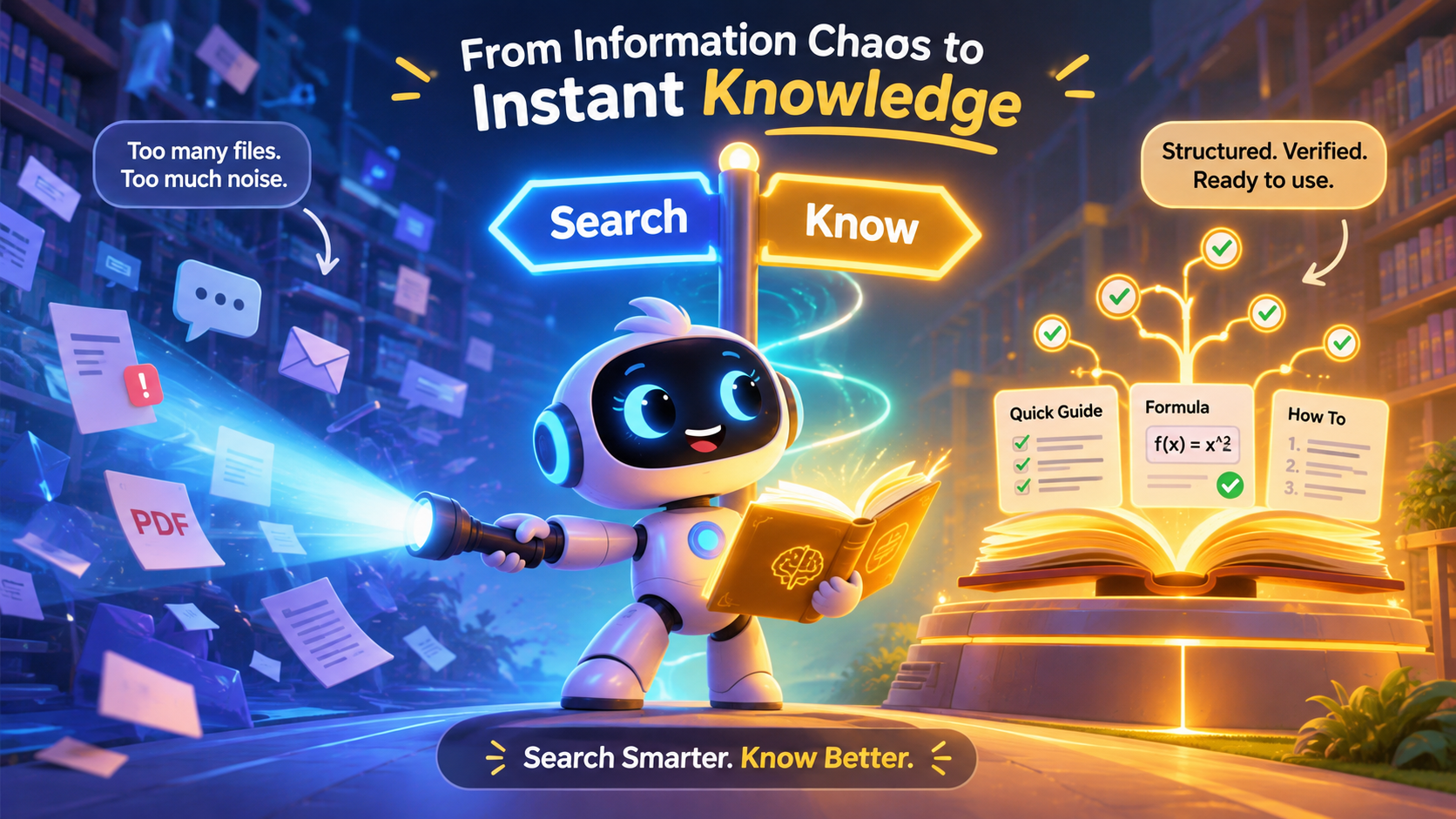
What if every team member could simply ask questions and get relevant answers from our own organisational knowledge?
Not just search through documents, but actually interact with business knowledge in a conversational way.
This became one of the motivations behind ROVA RAG - a knowledge layer that enables businesses to organise their information and make it accessible through AI-powered interactions.
The idea is simple: your business knowledge shouldn't remain locked away in documents or depend entirely on the people who happen to remember it.
2. The challenge of building and deploying AI agents
As we started working with voice AI and WhatsApp automation, we noticed another recurring problem.
Every time someone wanted to create a new voice agent or WhatsApp agent, they had to depend on our backend engineering team.
The team would need to understand the use case, configure the agent, connect the necessary components, test it and eventually deploy it.
While this worked for our early implementations, we knew it wasn't a scalable approach.
Businesses should not have to depend on a development team every time they want to experiment with a new AI use case.
We wanted to make the process much simpler.
What if a business user could define what an AI agent should do, provide the relevant instructions and knowledge, configure its behaviour and start experimenting — without having to write code or wait for backend development?
That thinking led to the ROVA Agent Builder.
Our objective was to move the process of building AI agents closer to the people who understand the business problems best.
Whether it's following up with leads, handling customer enquiries or supporting internal teams, creating an AI agent should become far more accessible.
3. The missing piece: organisational memory
As we spent more time working with businesses and building conversational AI systems, another opportunity became increasingly evident.
Businesses have thousands of interactions every day — with customers, employees, partners and vendors.
But how much of the context from those interactions is actually retained and reused?
A customer might explain a problem during one conversation, share additional information over WhatsApp and then call again a few days later.
An employee might discuss a project requirement, make a decision and revisit the same topic weeks later.
In many cases, the information exists somewhere, but the context is fragmented.
We began thinking about a different kind of capability: What if AI could retain relevant organisational context and use it when needed?
Imagine an AI agent that doesn't approach every interaction as a completely new conversation.
It can retrieve relevant context from previous interactions, understand the history and use that information to provide more relevant responses or support the next step.
This thinking shaped ROVA Cortex - our approach to organisational memory.
We see memory as an important building block for the next generation of enterprise AI. Because intelligence isn't just about having access to information. It is also about retaining relevant context and knowing when to use it.
4. Bringing the pieces together: ROVA Console
When we look back, these weren't three unrelated product ideas.
They were interconnected business problems.
- We needed a way to make organisational knowledge accessible.
- We needed a way to build and deploy AI agents without depending on developers for every change.
- We needed a way to retain context and memory across business interactions.
And gradually, these requirements started coming together into a larger vision.
ROVA Console brings these building blocks together.
Through ROVA Console, businesses can explore and build AI agents, work with their organisational knowledge, and leverage memory and connected capabilities as part of their AI experience.
It is not simply about building another chatbot or automating a few repetitive conversations.
We believe the real opportunity lies in helping businesses create an AI workforce — one that can understand a task, access the right knowledge, retain relevant context and use available tools to help get work done.
5. We built it for ourselves first. Now, we want businesses to experience it.
One thing I have always believed is that the best way to understand a product is to use it yourself.
ROVA Console has been shaped by our own experiences as a business. We have felt the challenges of onboarding people, sharing knowledge, building AI agents and retaining organisational context.
That is why this launch is particularly meaningful to us.
We are moving from building individual AI capabilities and solutions towards making those capabilities accessible through a unified platform.
And we're now opening up ROVA Console through an exclusive early access programme.
We want businesses, teams, founders and early adopters to explore it, experiment with it and discover where AI can make a meaningful difference in their day-to-day operations.
We know this is a journey. There is much more to build, improve and learn. But this is an important milestone in the direction we have been working towards.
Our vision is simple: Every business should have the ability to build its own AI workforce.
And with ROVA Console, we're taking another step towards making that vision a reality.
If you'd like to experience what we're building, join us at:
www.getrova.ai
Build your first AI employee. Welcome to ROVA AI.
Cheers,
Nitin Guru